Improving the lives of Children with Cerebral Palsy

As postulated by scholars, the perception of one’s own competence is a key factor in self-concept formations as it influences intrinsic motivation and self-determined behaviours. (reference) This perception is theorised to be affecting children emotionally, socially and academically and hence proves to be crucial in determining one’s success in learning and self-development. Here, the perceived competencies of children with cerebral palsy are examined and discussed to bring insight as to how these children should be assisted while they interact with the world around them.

It has been determined through the use of observations and semi-structured interviews that there are three themes which contribute to competency perception in children with cerebral palsy (reference). The first theme which affects competency perception is the environment; mainly the people, places, and objects around these children. It has been discovered that children feel competent when the environment matches with their abilities and needs.

blur close up hands marker
News articles depict bullying in mainstream schools.

Recent news articles have depicted bullying cases discovered in Singapore mainstream schools. These cases often feature typically-developmenting children verbally or/and physically harming a child with special needs. As a result, victims of bullying often experience social problems such as disruptive behaviours, deficits in social competence and a low quality of life. On the other hand, children who receive assistance in scaffolding on their abilities are found to have positive self-concepts. People around them took initiative by providing support in engaging these children in activities which match their interests.
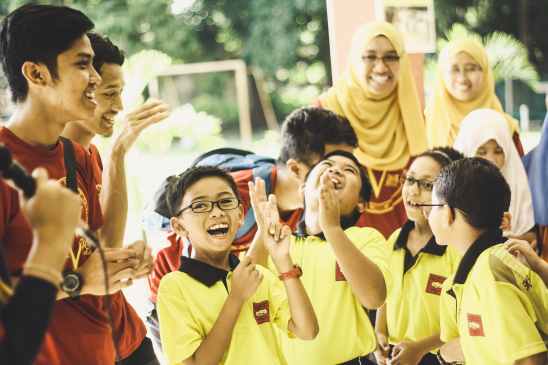
laughing children in between woman and man at daytime
The environment a child is in influences competency perceptions.

The second theme is the quality of activities planned out. As educators and school staff play a big part in children’s education, they impact the way children think of themselves and their individual abilities and talents. Through the research, it has been discovered that activities which children find valuable and experience enjoyment in prove to encourage them to fulfill their potential in varied learning dispositions.

A potential problem which may arise in Singapore mainstream schools would be the inevident focus on academic success as compared to an integrated approach to a spectrum of learning areas. This is an effect of the implementation of national examinations such as the PSLE and ‘O’ level examinations which determine the schools they are eligible to enter and consequentially the academic qualifications they obtain and the occupations they can work as. Hence, educators are responsible for planning and providing these children with activities which are suitable for them to carry out and instill a sense of curiosity and tenacity in finding out their individual talents. This provides the children with a platform to gain self-confidence by focusing more on their strengths than the weaknesses resulted from disabilities.
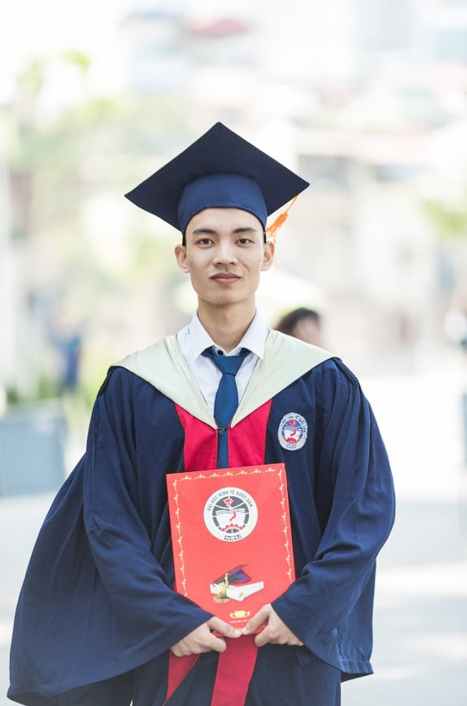
man in toga holding diploma
Academic success is an important part of school.

Although the first two themes are out of the child’s influence, the last theme depicts the child’s self-initiative in practising goal-directed tasks repeatedly. This is explained as the children’s engagement in daily tasks directed at providing them with methods of taking care of themselves and developing independence. As these children undergo repeated engagement, they develop problem-solving skills which assist them in finding solutions individually and hence interacting with the world around them.


 

Issues faced by parents of children with Cerebral Palsy

Cerebral palsy people often face challenges as part of their daily lives. However, they are not the only one facing the daily challenges. Parents of children with cerebral palsy faces challenges every day and some issues had been brought up by parents.

The first issue brought up by parents is the negative reaction from other people about their child. Ms. Mutmainnabibi Angullia, whose child is diagnosed with cerebral palsy, faces challenges when boarding a public bus to go to her son school. Half of the bus drivers she met did not allow her and her son to board the bus citing safety reason despite her showing proof that he has a disability (Goy, 2016). Some people lack awareness about the different disability that they end up hurting the disabled as well as their family member’s feelings. In my opinion, people should be educated about the different disabilities exist so that we can help and respect them instead of pushing them aside so that they will feel included.

boy in brown hoodie carrying red backpack while walking on dirt road near tall trees
Children with Cerebral Palsy often feel left out.

Another issue is children with cerebral palsy future. For Mr. David Heng, instead of wanting his son with cerebral palsy to do well in school, he hopes for his son to be independent. Mr. Heng worries that it will be difficult to care for his son when he grows old hence they train him to be independent even though it is difficult (Ying, 2016). Many parents with disabled children worry about their child’s future because they cannot care for them forever. At the same time, they do not want to burden their other siblings to take time to care for them. Being independent is tough for children with cerebral palsy therefore there should be help given to them to encourage independence in the future.

Lastly, financial issue is common among parents of children with cerebral palsy. In order to educate their children, they enroll their children in classes and the overall cost may be expensive especially for parents who gave up their job to provide full-time care for their children. According to housewife Juliah Kasiman, education for her son with cerebral palsy is still expensive despite government subsidies (Goy and Teng, 2016). Enrolling special need children in special schools for them costs extra more as the workers the school is specialised to care for their children special need. Therefore, it will be difficult for families to cope with living expenses especially if there is only one sole breadwinner in the family.

advertising business close up commerce
Parents with children with Cerebral Palsy undergo financial struggle.

Cerebral Palsy Alliance Singapore (CPAS) is an organisation that serves as an intervention for children and adults with cerebral palsy and multiple disorders since 1957. Through this organisation, children will be taught based on their developmental needs through programmes and classes as well as promotes independence for children and adults with cerebral palsy. CPAS provide financial assistance schemes for low-income families so that the cerebral palsy receives the education they deserve (Cerebral Palsy Alliance Singapore, n.d.).

Characteristics and Symptoms of Cerebral Palsy

Cerebral Palsy is caused by traumatic injury to a developing brain, including the parts of the brain responsible for motor control, coordination and balance.

Damage to different parts of the brain’s motor control centers causes different types of cerebral palsy. The level of disability depends on the severity and timing of the brain injury. About 70 percent of cerebral palsy cases are caused by prenatal injuries, 20 percent are caused by injuries during birth and 10 percent are caused by injuries after birth.

Cerebral palsy can be classified into three types. The first type is spastic cerebral palsy. It is the most common type of cerebral palsy amongst people who have cerebral palsy. Spastic cerebral palsy is caused by damage to the brain’s motor cortex. Typical symptoms of spastic cerebral palsy include stiff and exaggerated movements. A spasticity is a form of hypertonia or increased muscle tone. When a muscle is affected by spasticity, the faster the limb is moved, the stiffer it seems. This results in stiff muscles which can make movement difficult or even impossible. The second type is athetoid/dyskinetic cerebral palsy. This type is caused by injury to the brain’s basal ganglia, which controls balance and coordination. Children with athetoid/dyskinetic CP often exhibit involuntary tremors. The third type is ataxic cerebral palsy. Ataxic cerebral palsy is characterized by lack of coordination and balance. This is caused by damage to the cerebellum, which is the part of the brain that connects to the spine.

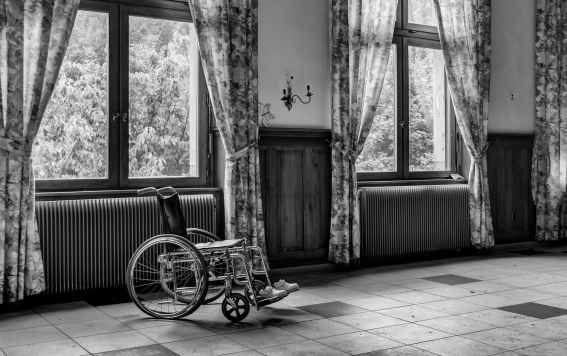
grayscale photo of wheelchair
Children with Cerebral Palsy may require wheelchairs to move around.

Cerebral palsy can also be grouped by the severity or location of paralysis stemming from damage to the developing brain. This is described using the suffix “–plegia”, or paralysis, of one or more limbs. The location of paralysis is described as; monoplegia, diplegia/paraplegia, hemiplegia, quadriplegia and double hemiplegia. Monoplegia is the paralysis of one limb. Diplegia/Paraplegia is the paralysis of two limbs, usually the legs. Hemiplegia is the paralysis on one side of the body. Quadriplegia is the paralysis of the whole body like the face, arms, legs, and torso. Double hemiplegia is the paralysis of the whole body used to distinguish those whose arms are more affected than their legs.

The symptoms of CP range from mild to severe. They also vary depending on the part of the brain that was affected. Some of the more common symptoms include:

  • delays in reaching motor skill milestones, such as rolling over, sitting up alone, or crawling
  • delays in speech development and difficulty speaking
  • stiff muscles
  • abnormal muscle tone
  • a lack of muscle coordination
  • tremors or involuntary movements
  • excessive drooling and problems with swallowing
  • difficulty walking
  • favoring one side of the body, such as reaching with one hand
  • neurological problems, such as seizures, intellectual disabilities, and blindness
adult alone anxious black and white
Children with Cerebral Palsy require physical and emotional support.

Introduction to Cerebral Palsy

Cerebral palsy refers to a group of disorders that affect muscle movement and coordination. In many cases, vision, hearing, and sensation are also affected. The word “cerebral” means having to do with the brain.

baby touching woman s face
Understanding the needs of children with cerebral palsy

Cerebral Palsy is the most common motor disability in childhood. In Singapore, as said by CPAS’ chairman, Dr Kevin Lim, there is no official database of people with cerebral palsy for researchers or welfare groups to draw on. Researchers or welfare organisations can only estimate the number of people with cerebral palsy in Singapore (Sen, 2017). Based on international estimates and not empirical data, 3 out of every thousand people have cerebral palsy (Sen, 2017). CPAS, which is known as the Cerebral Palsy Alliance Singapore, was established to provide early intervention, special education, rehabilitation services, day activity centre programmes, vocational training and gainful employment to persons with Cerebral Palsy and multiple disabilities in Singapore. As of now, CPAS currently serves 700 clients aged between a few months and 55 years.

According to estimates from CDC’s Autism and Developmental Disabilities Monitoring (ADDM) Network, approximately 1 in 323 children has been identified with Cerebral Palsy. Population-based studies from around the world report prevalence estimates of CP ranging from 1.5 to more than 4 per 1000 live births or children of a defined age range.

Advocacy is vital for persons with cerebral palsy as the well-being of the child and family will be kept at the forefront. Not only that, advocacy highlights services that are available to the public and enhances the impact of individual efforts (Emerson, Houtrow, Sholas, & Adams).